
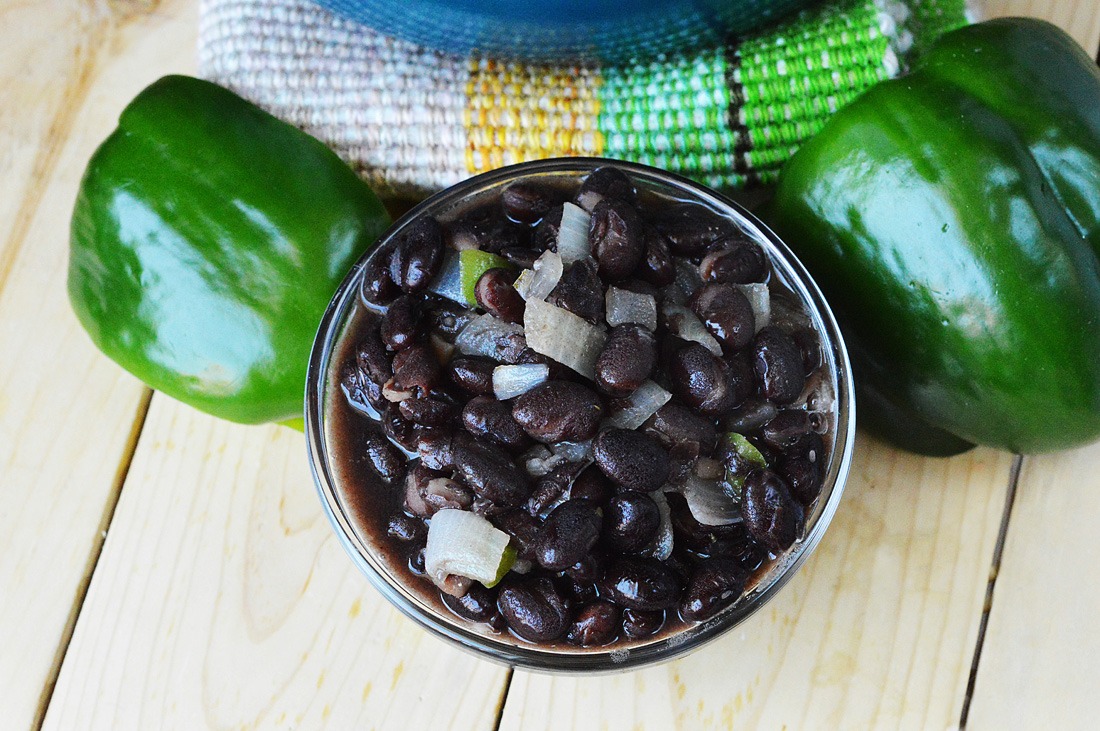

What’s more traditional than a plate of Cuban black beans and rice; the classic Cuban frijoles negros recipe? Unless we’re talking about congri (a dish where dried black beans and white rice are cooked together and served as one dish), which is also a huge favorite of mine, but that Cuban rice and black bean recipe is another post entirely. Today we’re sharing our favorite frijoles negro recipe, classic and authentic Cuban black beans.
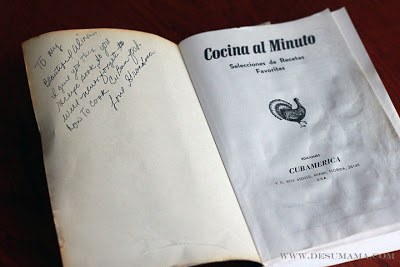
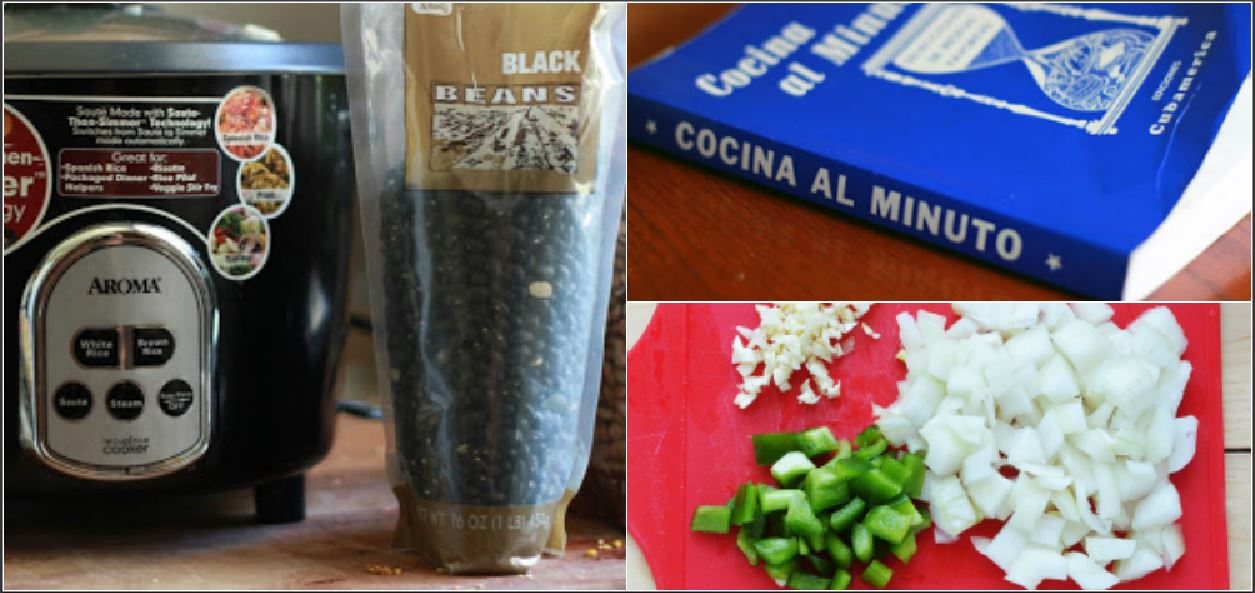
This traditional Cuban recipe can be hard to find online but frijoles Cubanos are totally worth it. Luckily I have this old cookbook that every Cuban American has in their home which dates back to the 1970s. This Cuban cookbook is like a bible for those who fled the island and landed in the United States. Its title, Cocina al Minuto, showcases how to blend our Cuban culture with a new fast-paced American lifestyle. This is mine that used to be my Mom’s, in which she gave to my daughter, “so she never forgets how to cook Cuban food”.
 Frijoles Negro Recipe: Authentic Cuban Black Beans
That cookbook is one of my most treasured items. I can’t wait to cook Cuban recipes alongside my daughter one day, and especially this arroz con frijoles negro recipe. Such a dream come true! The cookbook is in Spanish, though, so its a good thing my kids are studying the language in their dual immersion school!
Though black beans are the staple, Frijoles Cubanos can also come as “colorado” which refers to red beans. Very rarely have I seen pinto or white beans used in a Cuban recipe, although peas and lentils are often used.
Frijoles negro Cubanos are important to our Cuban culture, but in no way are they the only focus. Cubans love their Lechon Asado (which I make in a slow cooker); this staple of Cuban style arroz con pollo is a crowd favorite, and of course you can’t forget the delicious assortments of Cuban desserts!
 Cuban Black Beans: Los Mejores Frijoles Negro Cubanos
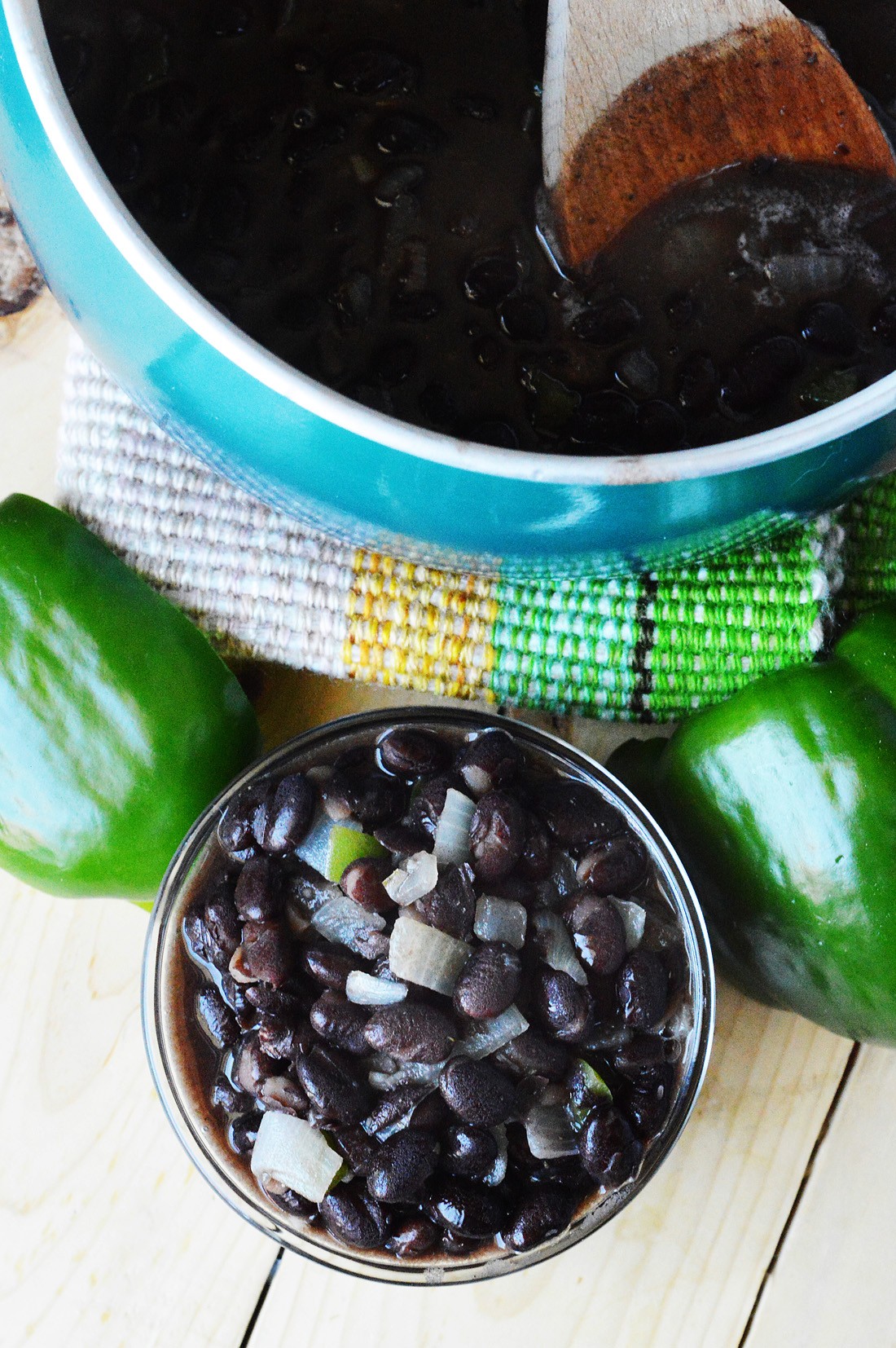
These frijoles negro Cuban style will have your mouth watering with goodness! Pour over white rice for a classic take, add to this 3 Bean Turkey Chili recipe or this Stuffed Bell Peppers recipe or just eat as a soup! I’ve listed more of my Cuban recipes for you below, too.
Ingredients:
- 2 Cans Black Beans (or 6 cups of dried black beans, cooked quickly with pressure with the recipe below)
- ½ Cup Water
- ½ White Onion, diced finely
- 1 Bell Pepper, diced finely
- 2 Cloves Garlic, minced finely
- 2 Tablespoons Olive Oil
- 1 Tablespoon White Vinegar
- Splash or two of Vino Seco*
- ½ Teaspoon Salt
- ½ Teaspoon Sugar
- ½ Teaspoon Oregano
- ¼ Teaspoon Ground Cumin
- 1 bay leaf
* Vino Seco translates as “dry wine” and is a product I buy specifically at Hispanic markets. Check out Cuban Vino Seco on Amazon Prime if you can’t find near you!
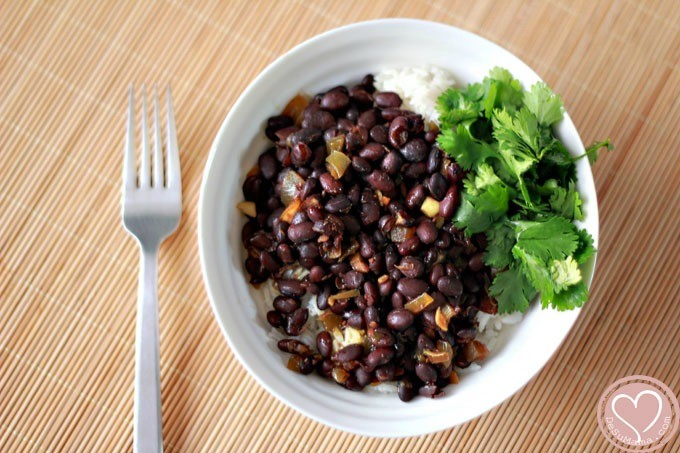
How to Make Frijoles Negros
- In a pot, place your beans and water. Don’t drain the beans of their juice. Bring to a boil and let simmer.
- While simmering, add your pepper, garlic, onion, and olive oil to a pan and sauté for about five minutes or until ingredients are translucent. Chop the ingredients finely or use a grater if you prefer not to have them visible in the beans.
- Add the rest of the ingredients to the pot with the beans including your sautéed mixture.
- If desired, you can place a bit of the black beans in the sautéed mixture first and mash them up in order for the pepper mixture to mix better with the beans. This helps thicken the consistency.
- Stir well and allow to simmer for 5-7 minutes on low heat.
- Add a bit more olive oil right before serving.
How to Make Black Beans in a Rice Cooker
Have you ever wondered if you can cook black beans in a rice cooker? I love using appliances in a multitude of ways as it often saves me from feeling like I need the latest great gadget or kitchen appliances. You have probably heard of cooking dried beans in your slow cooker, but you can learn how to cook dry black beans in a rice cooker too! Pressure cooker, rice cooker, they’re kind of do the same thing: cook foods quickly with the use of pressure. That appliance you use to cook rice with heat and pressure can be used for so much more! My mom has an old-school stainless steel pot with a little kettle type top that screws in place but my rice cooker/pressure cooker is a bit more high tech.
I make Cuban black beans at least once a week. Before I came across this technique, my beans always came from a can because soaking and simmering beans for hours sounds like a pain. Cooking dried beans versus canned beaned lets you control the sodium, flavorings and overall freshness. Oh, not to mention how expensive cans of organic cooked beans can be versus dried!
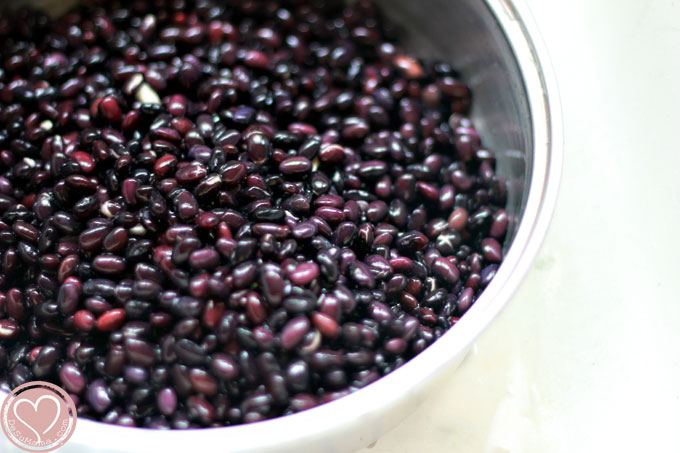
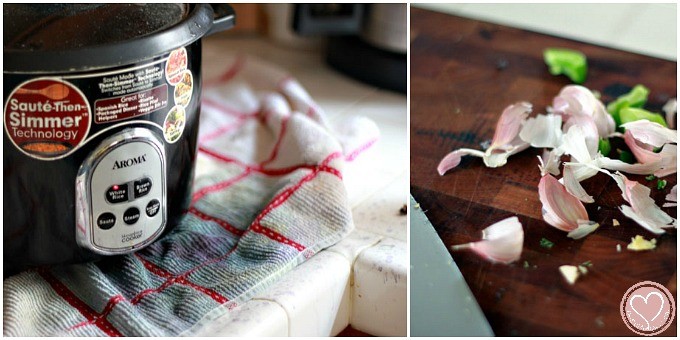
How to Cook Beans in a Rice Cooker
Here are a few tips on rice cooker black beans. Ok, don’t blink…this is going to happen fast:
- Wash your beans and throw out the icky ones.
- Cover the beans with water.
- Push button to start rice cooker and let cook until water has absorbed and beans are soft.
Amazing, right!? Throw in a few garlic cloves and onion for taste, but hold off on the other seasoning. Once cooking black beans in a rice cooker, you can continue with the Cuban style recipe above.
So 1 pound of dried beans makes about 2 to 3 cups of cooked beans.
Cuban Recipes We Love
Frijoles Negros Recipe
A frijoles negros recipe that is super authentic and all the way delicious! Plus, tips on how to make Cuban black beans in your rice cooker! No more canned beans when cooking dried black beans are this easy.
Ingredients
- 2 Cans Black Beans (or 6 cups of dried black beans using the recipe in post)
- 1/2 Cup Water
- ½ White Onion, diced finely
- 1 Bell Pepper, diced finely
- 2 Cloves Garlic, minced finely
- 2 Tablespoons Olive Oil
- 1 Tablespoon White Vinegar
- Splash or two of Vino Seco*
- ½ Teaspoon Salt
- ½ Teaspoon Sugar
- ½ Teaspoon Oregano
- ¼ Teaspoon Ground Cumin
- 1 bay leaf
Instructions
- In a pot, place your beans and water. Don’t drain the beans of their juice. Bring to a boil and let simmer.
- While simmering, add your pepper, garlic, onion, and olive oil to a pan and sauté for about five minutes or until ingredients are translucent. Chop the ingredients finely or use a grater if you prefer not to have them visible in the beans.
- Add the rest of the ingredients to the pot with the beans including your sautéed mixture.
- If desired, you can place a bit of the black beans in the sautéed mixture first and mash them up in order for the pepper mixture to mix better with the beans. This helps thicken the consistency.
- Stir well and allow to simmer for 5-7 minutes on low heat.
- Add a bit more olive oil right before serving.


LC
June 29, 2011 at 3:15 amLooks so yummy!!!!
Picadillo: Simple Cuban Recipe - De Su Mama
October 20, 2012 at 11:13 am[…] Check out a few other of simple Latino recipes! Such as a ground turkey taco and Cuban black beans. […]
Cuban Recipes: My Family's Cuban Sofrito - De Su Mama
December 8, 2014 at 12:30 pm[…] Walmart asked how we use tomatoes in our kitchen, and I instantly thought of Cuban recipes. This recipe for sofrito is the base for my Cuban Arroz con Pollo, Cuban Picadillo and Cuban Black Beans […]
Debbi Kruzel
July 22, 2015 at 12:10 amMy Tia told me always put malanga in with the beans, have you ever tried it that way?